Stories
US-China AI Race Echoes Cold War: A New Hotline for a New Era of Risk
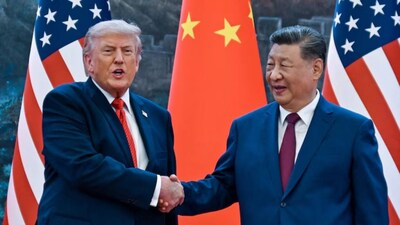
- •The US-China AI dialogue mirrors the 1962 Cold War nuclear crisis, leading to discussions for an AI notification mechanism, safety cooperation, and a hotline to prevent catastrophic misunderstandings.
- •Despite intense competition in advanced semiconductors, trade, and military influence, both the US and China recognize shared AI risks like autonomous cyberattacks, loss of control, and military miscalculations.
- •Similar to the nuclear arms race, both Washington and Beijing fear falling behind in AI, potentially incentivizing speed over safety and increasing the risk of accidental escalation.
- •The US is pursuing a three-track strategy for AI: compete, maintain communication, and build guardrails, acknowledging that complete decoupling without communication channels during crises is dangerous.
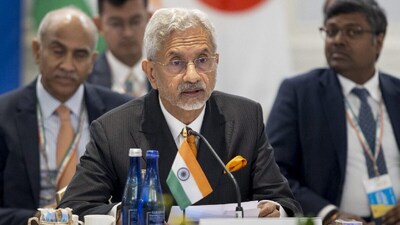
- •India, a major non-aligned power, can leverage its position to shape global AI governance, digital public infrastructure standards, and safety norms, while building indigenous AI capabilities to ensure strategic freedom.
Key Questions Answered
Ahead of and during the September 2026 summit between Presidents Donald Trump and Xi Jinping, U.S. and Chinese officials discussed establishing a notification mechanism, safety cooperation, and a hotline for serious artificial intelligence incidents to mitigate shared risks like autonomous cyberattacks and military miscalculations.
U.S. Treasury Secretary Scott Bessent led the American delegation during the bilateral artificial intelligence safety talks and discussions regarding the proposed notification mechanism with China.
During the artificial intelligence era, India can pursue strategic autonomy by building indigenous capabilities like domestic compute capacity and foundational models while maintaining partnerships across both American and Chinese ecosystems to preserve sovereignty.