Stories
Intellectual Jobs at Risk as AI Takes Over: Sridhar Vembu Lists What Humans Can Do
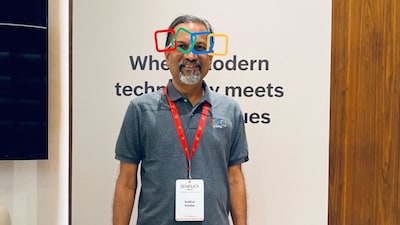
- •Zoho founder Sridhar Vembu warns that most intellectual jobs, including software development and pure mathematics, are at risk due to rapid advancements in artificial intelligence.
- •Vembu suggests that instead of focusing solely on intellectual work, humans can engage in activities related to nature, nurture, culture, and spiritual traditions, such as restoring soil and water, raising children, and making music.
- •He rejects Universal Basic Income (UBI) as an unimaginative vision, arguing that political economies must focus on proper income distribution and preventing the monopolization of means of production.
- •Former OpenAI founding member Andrej Karpathy highlights a widening gap in public understanding of AI, noting that while 75 percent of the global population has barely interacted with large language models, a small fraction is already experiencing frontier AI capabilities.
- •Karpathy explains that the AI capability divide is driven by ambition, problem size, the jaggedness of system capabilities in verifiable digital domains, and restricted access to advanced systems.
Key Questions Answered
Zoho founder Sridhar Vembu suggested that humans can focus on a wide variety of activities grouped into nature, nurture, culture, and scripture. These include restoring soil and water, raising children, caring for elders, making music, sustaining festivals, sports, entertainment, and practicing spiritual traditions rather than worrying about employment as the sole measure of usefulness.
Sridhar Vembu rejected Universal Basic Income as an unimaginative and dystopian vision created by the intellect-worshipping modern man. He argued that UBI implicitly assumes the monopolization of the means of production, whereas sovereign states already hold the power to disallow such monopolies.
Andrej Karpathy described a wide capability gap, estimating that roughly 75 percent of the global population has barely interacted with large language models, while about 20 percent are casual users who treat them like advanced search engines or writing aids. Meanwhile, a tiny fraction of professionals use frontier systems to tackle complex multi-week software and mathematical projects.