Stories
James Webb Telescope Reveals True Shape of Scorching Exoplanet Atmosphere

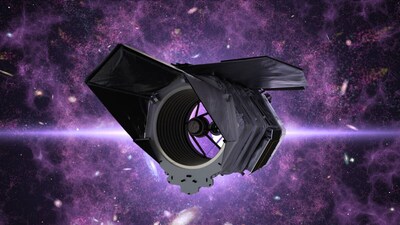
- •Astronomers used the James Webb Space Telescope to map the uneven and asymmetrical shape of the hot Jupiter exoplanet WASP-17b located 1,300 light-years from Earth.
- •Researchers applied a novel transmission strings technique to measure variations around the planet's atmospheric edge rather than relying on traditional uniform averages.
- •The study revealed that powerful equatorial winds push heat from the permanent dayside to the nightside, making the evening side hotter and more extended than the morning side.
- •The breakthrough provides a three-dimensional view of exoplanet weather and offers new ways to study complex atmospheric dynamics beyond our solar system.
Key Questions Answered
The transmission strings technique analyzes how starlight changes at different transit stages when filtering through an exoplanet's atmosphere. Developed by University of Bristol astrophysicists, it investigates variations around the atmospheric edge rather than treating it as a uniform ring.
Powerful equatorial winds transport heat from the permanently illuminated dayside to the nightside of tidally locked WASP-17b. This circulation causes the evening side to remain hotter and more extended than the cooler morning side.
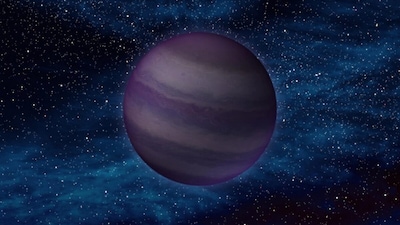
WASP-17b is a giant exoplanet classified as a hot Jupiter, located approximately 1,300 light-years from Earth. It orbits extremely close to its host star, exposing it to intense radiation and creating extreme atmospheric conditions.