Stories
How a 2001 Cosmic Signal Hidden in Telescope Data Sparked a New Era in Astronomy
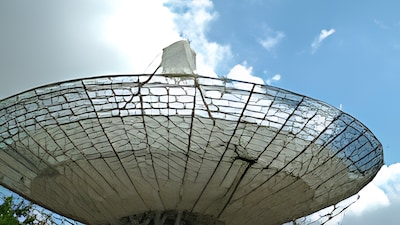
- •A mysterious radio signal recorded in 2001 by Australia's Parkes radio telescope remained hidden in archived data for six years before its significance was recognized.
- •Astronomer Duncan Lorimer and his student David Narkevic identified the unusual signal in 2007 while examining archived pulsar survey observations.
- •Lasting less than five milliseconds, the exceptionally bright signal was named the Lorimer Burst and introduced scientists to fast radio bursts originating beyond the Milky Way.
- •While subsequent discoveries linked some fast radio bursts to magnetars, the exact origins of all such cosmic signals remain an ongoing mystery in astronomy.
Key Questions Answered
The first recognized fast radio burst was recorded on July 24, 2001, by Australia's Parkes radio telescope, but it remained hidden in archived data until it was discovered by researchers in 2007.
Named after astronomer Duncan Lorimer, the Lorimer Burst was identified in 2007 when Lorimer and his student David Narkevic examined archived pulsar survey data. They found an exceptionally bright signal lasting under five milliseconds with characteristics indicating an origin beyond the Milky Way.
The exact origins of all fast radio bursts remain an important question, though early explanations included explosive cosmic events. The 2020 detection of an FRB-like burst from a Milky Way magnetar strengthened the link between magnetars and these signals, although not all FRBs necessarily share the same origin.