Stories
Atacama Desert Blooms: The Mystery of Earth's Driest Desert Turning into a Sea of Flowers Explained
M
Moneycontrol•20-09-2026, 15:14
Atacama Desert Blooms: The Mystery of Earth's Driest Desert Turning into a Sea of Flowers Explained
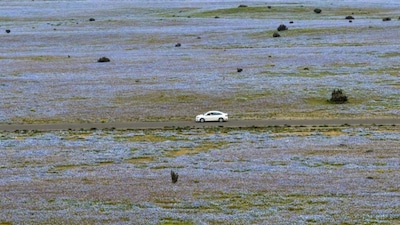
- •Chile's Atacama Desert, the driest non-polar desert, transforms into a vibrant 'Flowering Desert' (Desierto Florido) during the Southern Hemisphere's spring.
- •This phenomenon occurs when dormant seeds in the desert soil germinate due to increased moisture from occasional rainfall.
- •The intensity of the bloom varies annually, depending on the amount and timing of moisture reaching the desert.
- •Desert plants have adaptations allowing seeds to remain dormant for long periods, waiting for suitable conditions to grow, flower, and produce new seeds.
- •The blooms, concentrated in specific areas, offer insights into life's survival in extreme environments and attract visitors and researchers.
Key Questions Answered
The phenomenon, known as the flowering desert or Desierto Florido, occurs when occasional rainfall provides moisture to dormant seeds buried in the soil, causing them to germinate and bloom between August and November.
The striking transformation typically occurs during the Southern Hemisphere's spring, specifically between August and November, when increased moisture activates dormant plant structures.
The Atacama receives extremely little rainfall because the Andes Mountains block humid air from the Amazon Basin, while the cold Humboldt Current along the Pacific coast cools the air and prevents rainfall.