Stories
Unearthing Ancient Wonders: Global Monolithic Marvels Carved from Single Rocks
- •Kailasa Temple in Ellora, India, is the planet's largest monolithic rock excavation, carved top-down from a basalt cliff in the 8th century, removing 200,000 tonnes of rock.
- •The 57-foot Gommateshwara (Bahubali) in Shravanabelagola, India, is the world's tallest free-standing monolithic statue, sculpted from a single granite outcrop around 983 CE.
- •China's Leshan Giant Buddha, a 71-meter-tall seated Maitreya, is the tallest pre-modern stone statue, initiated in 713 CE and featuring an internal drainage system.
- •Ethiopia's Church of Saint George in Lalibela is a cruciform church hewn into red volcanic tuff in the late 12th century, isolated by a 12-meter-deep trench.
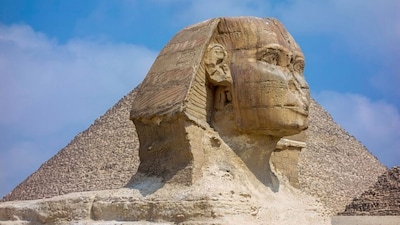
- •The Great Sphinx of Giza, Egypt, sculpted from a natural limestone ridge around 2500 BCE, is the oldest known monumental sculpture from ancient Egypt.
- •Al-Khazneh (The Treasury) in Petra, Jordan, is a nearly 40-meter-tall facade carved directly into a rose-sandstone gorge face by the Nabataeans in the 1st century CE.
- •The Moai of Rano Raraku, Easter Island, served as the primary quarry for colossal statues, with hundreds of unfinished figures remaining embedded in the volcanic ash quarry slopes.
Key Questions Answered
The Kailasa Temple, designated as Cave 16 and inscribed as a UNESCO World Heritage Site in 1983, is the planet's largest monolithic rock excavation. It was excavated in the 8th century under the Rashtrakuta king Krishna I by carving top-down into a sheer basalt cliff without external scaffolding.
The Leshan Giant Buddha is a 71-metre-tall seated Maitreya Buddha statue in Sichuan, China, making it the tallest pre-modern stone statue in the world. Initiated in 713 CE by the monk Haitong, it was built to calm perilous river rapids where three rivers converge.
The Great Sphinx of Giza dates back to the Fourth Dynasty reign of Pharaoh Khafre around 2500 BCE. It was sculpted from a single natural limestone ridge on the Giza plateau, with craftsmen shaping the body around alternating hard and soft sedimentary strata.