Stories
How Rajasthan Became India's Unlikely Pioneer in Olive Cultivation
N
News18•06-10-2026, 15:20
How Rajasthan Became India's Unlikely Pioneer in Olive Cultivation
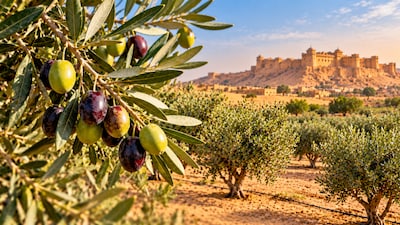
- •Rajasthan has emerged as India's leading state for olive cultivation, defying its hot and arid climate through modern farming and drip irrigation.
- •Commercial olive cultivation began in the late 2000s with saplings brought from Israel, leading to the first successful harvest in 2012.
- •Bikaner has become a major hub for both growing olives and processing them, featuring a dedicated facility established in 2013 for oil extraction.
- •While other states like Jammu and Kashmir and Himachal Pradesh have explored the crop, Rajasthan has built a fully functional domestic olive oil production ecosystem.
- •Rising health awareness and changing dietary habits continue to drive up India's demand for olive oil, positioning domestic production as a valuable alternative to imports.
Key Questions Answered
Rajasthan has emerged as an unlikely olive-growing region in India, successfully cultivating olive trees in its hot and arid climate through modern farming techniques and drip irrigation.
The experimental olive plantation programme began around 2007 with saplings brought from Israel, the first harvest was recorded in 2012, and commercial olive oil production officially began in 2013 with a processing facility established in Bikaner.
While Rajasthan has gained prominent recognition for developing an olive oil production ecosystem, other states and regions including Jammu and Kashmir, Himachal Pradesh, and Uttar Pradesh have also explored olive cultivation.