Stories
Why Does the Four-Horned Khadu Lead? Nanda Devi's Farewell Moves Devotees to Tears!
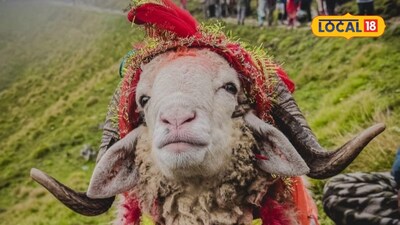
- •The four-horned Khadu holds special significance in Uttarakhand's Nanda Devi Rajjat and Badi Jat Yatra, considered an auspicious messenger of Mother Nanda.
- •According to Pandit Kailash Upadhyay, Mother Nanda is worshipped as the daughter of the mountains and a goddess in Kumaon and Garhwal folk culture, with the Khadu as her messenger.
- •The four-horned Khadu receives special respect in the Nanda Devi Yatra; it is decorated before the journey, and offerings for Mother Nanda are placed on its back.
- •Homkund is the final and most emotional stop of the Nanda Devi Rajjat Yatra, where Mother Nanda is bid farewell towards Kailash, symbolizing a daughter's departure from her maternal home.
- •After Mother Nanda's farewell at Homkund, the four-horned Khadu is worshipped and then left alone in the direction of Kailash, a unique and emotional tradition believed to carry Mother Nanda's message.
Key Questions Answered
The four-horned Khadu is a special male sheep with four horns that serves as the auspicious messenger and leader of Mother Nanda's journey in Uttarakhand's Nanda Devi Rajjat and Badi Jat Yatra. Devotees consider it a sacred symbol and the guide of the goddess's palanquin.
Before the journey starts, the Khadu is traditionally decorated by placing beautiful clothes, makeup items, jewelry, and local delicacies for Mother Nanda on its back. Devotees offer prayers, show it special respect, and seek blessings from it.
At Homkund, which is the emotional final stop where Mother Nanda is bid farewell toward Kailash, the four-horned Khadu is worshipped and then left alone to head in the direction of Kailash. Believers view this as the Khadu carrying the goddess's message forward.