Stories
Vande Bharat vs Shatabdi: Speed, Fares, Modern Amenities - Which Train Reigns Supreme?
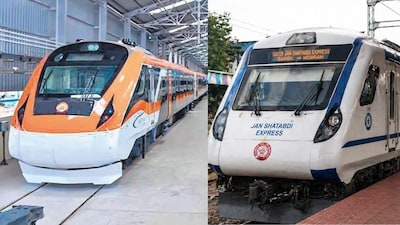
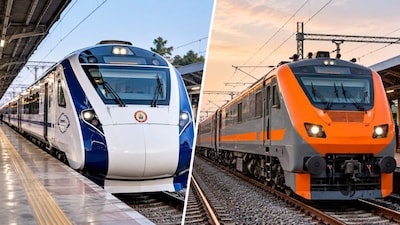
- •Vande Bharat is a self-powered electric trainset with no separate locomotive, while Shatabdi uses a conventional locomotive system.
- •Vande Bharat operates at a maximum speed of 160 km/h and offers rapid acceleration, compared to Shatabdi's 130 km/h.
- •Vande Bharat covers the New Delhi-Chandigarh route faster (2h 48m with 1 stop) than Shatabdi (3h 19m with 4 stops).
- •Vande Bharat features automatic doors, GPS, CCTV, bio-vacuum toilets, and 180-degree rotating seats; Shatabdi has LHB coaches and some Vistadome coaches.
- •Fares for AC Chair Car are similar, but Vande Bharat's Executive Class is slightly more expensive; Vande Bharat offers diverse food options, while Shatabdi allows IRCTC eCatering.
Key Questions Answered
Vande Bharat is a self-powered electric trainset capable of operating at speeds up to 160 km/h with rapid acceleration. In contrast, Shatabdi uses a conventional locomotive to pull coaches and operates at a maximum speed of 130 km/h.
Both are fully air-conditioned daytime trains, but Vande Bharat features automatic doors, GPS information systems, CCTV, bio-vacuum toilets, and 180-degree rotating seats in Executive Class. While Shatabdi uses LHB coaches, it features Vistadome glass-roof coaches on select routes.
On the New Delhi-Chandigarh route, AC Chair Car fares are nearly identical at Rs. 714 for Vande Bharat and Rs. 715 for Shatabdi. However, in Executive Class, Vande Bharat costs Rs. 1,411, making it slightly more expensive than Shatabdi at Rs. 1,120.