Stories
Why Your Rava Fish Fry Is Not Crispy and How to Fix It

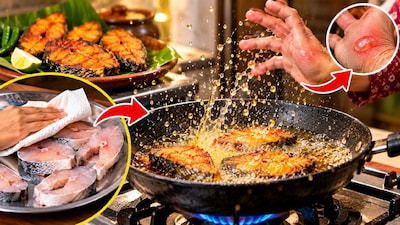
- •Failing to completely remove moisture from washed fish can make the rava coating soggy instead of crispy.
- •Excess salt or lemon juice in the marinade can release water and ruin the texture of the fish.
- •Applying a rava layer that is too thick or too thin prevents even frying and proper crispiness.
- •Frying in oil that is not at the right temperature can either make the fish oily or burn the coating.
- •Crowding the pan with too many fish pieces drops the oil temperature and traps steam.
- •Flipping or moving the fish too frequently right after placing them on the pan causes the coating to shed.
- •Covering freshly fried fish traps steam and makes the crispy rava layer soft.
Key Questions Answered
Leftover moisture on the fish prevents the masala and semolina from adhering properly, turning the coating soggy when fried. Additionally, using too much salt or lemon juice in the marinade can draw out excess water, while incorrect oil temperatures or overcrowding the pan can cause the crust to absorb too much oil or burn.
For home-style fish frying, the oil temperature should ideally be maintained between 170°C and 175°C, or heated over medium to medium-high heat until ready. Avoid waiting for smoke to billow from the oil, and adjust the flame after dropping in the fish so the coating seals correctly without burning.
Placing newly fried fish into a sealed container traps escaping steam inside, which generates moisture on the crispy semolina layer and causes the fish to turn soft very quickly. Instead, keep the fried pieces in a single layer on a wire rack or a plate that does not trap oil and water.