Stories
Alwarpet and Mylapore: From Lush Landscapes to Concrete Jungles
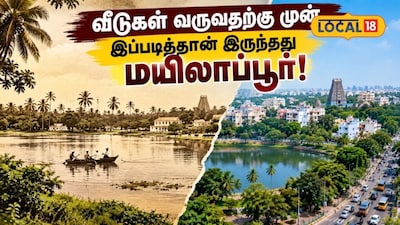
- •Alwarpet and Mylapore, once rural with dense trees, orchards, agricultural lands, and vast natural water bodies, transformed into modern urban centers.
- •Nageswara Rao Park in Mylapore was formerly 'Aaratha Kuttai', a massive natural water body, filled and converted due to city expansion.
- •The 'Long Tank', a six-kilometer water body on old Madras's southern border, hosted Madras Boat Club races before being reclaimed for residential areas.
- •Vembakkam Gardens, owned by Sir V. Bhashyam Aiyangar, was gradually divided into residential plots, with Vidya Mandir School later built on a part of it.
- •Post-1940s, City Improvement Trust plans converted groves and ponds into residential layouts, leading to current waterlogging in Alwarpet as a historical trace of old waterways.
Key Questions Answered
Before being converted into a park due to the city's expansion plans, the site of Nageswara Rao Park was once a massive natural water body known as 'Aaratha Kuttai' which served as a water source for the surrounding groves.
The 'Long Tank' was a six-kilometer-long water body where the historic Madras Boat Club held boat races in the late 19th century. It was later reclaimed and transformed into residential layouts like Vembakkam Gardens and Vidya Mandir School, as well as parts of Mylapore and Alwarpet.
As Madras grew rapidly after the 1940s, plans by the City Improvement Trust turned open spaces and ponds into residential layouts. The construction of C.P. Ramasamy Road, Eldams Road, and other developments cut off old waterways, though heavy rains still cause water to collect in low-lying Alwarpet streets today.