Stories
Why Unlicensed 6 GHz Spectrum Matters for India's Youth and Digital Economy
F
Firstpost•17-10-2026, 09:59
Why Unlicensed 6 GHz Spectrum Matters for India's Youth and Digital Economy
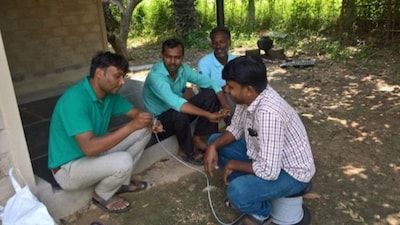
- •In 2010, a community wireless network in Chanderi demonstrated how unlicensed spectrum allows local communities to experiment, build digital skills, and foster entrepreneurship without needing commercial backing.
- •With 65 percent of India's population under 35 and millions entering the workforce, shared high-capacity Wi-Fi nodes are critical to powering micro-enterprises, remote work, and AI-driven services in small towns.
- •While India opened the lower 6 GHz band for licence-exempt wireless access in January 2026, experts argue that expanding unlicensed access further is necessary to provide enough capacity for demanding applications.
- •Global examples like the United States, which made the entire 6 GHz band available for unlicensed use, highlight how open spectrum fosters innovation and entrepreneurship across diverse ecosystems.
- •Preserving a permissionless layer in India's digital infrastructure by keeping enough unlicensed spectrum open will allow rural youth, small businesses, and communities to innovate freely.
Key Questions Answered
In January 2026, India opened the 5925–6425 MHz portion of the 6 GHz band for licence-exempt wireless access, permitting Low Power Indoor and Very Low Power outdoor systems with a maximum channel bandwidth of 320 MHz.
Government data records that by February 28, 2026, there were 4,09,403 operational PM-WANI hotspots across India, alongside 2.44 crore users and about 58.64 petabytes of cumulative data consumption.
The Department of Telecommunications (DoT) is evaluating whether to permit high-power outdoor WiFi operations to accelerate high-speed wireless broadband deployment, though ISRO has raised concerns over potential satellite service interference.