Stories
Analyzing India's Resilience Against Street Anarchy and the 3.5% Rule
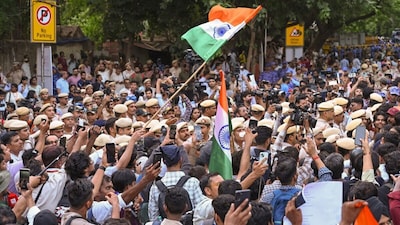
- •India’s steady economic and developmental progress faces underlying challenges from external actors attempting to instigate street anarchy similar to recent events in Bangladesh and Nepal.
- •Harvard researcher Erica Chenoweth's 3.5% rule suggests that a protest reaching 3.5 percent of a nation's population during peak mobilization can topple a government, a threshold that translates to nearly 52 million people in India.
- •India's robust federal structure, multi-tiered electoral safety mechanisms, and bureaucratic safeguards make the 3.5% rule practically unfeasible and ineffective for orchestrating a regime change.
- •Vested interests employ layered strategies including institutional infiltration, economic exploitation, and algorithmic polarization to target India's civilizational and democratic foundations.
- •The Indian Armed Forces remain the ultimate bastion of sovereignty and stability, ensuring that any attempts at loyalty shifts or forced takeovers are a dead proposition.
Key Questions Answered
Postulated in 2013 by Harvard thinker Ms. Erica Chenoweth, the 3.5% rule states that if a protest reaches 3.5% of a total population threshold during peak mobilisation, it will likely achieve its aim to topple a government. This insight originated from political scientist Mark Lichbach's 1995 book, The Rebel's Dilemma: Economics, Cognition, and Society.
Applying the 3.5% rule in India borders on absurdity because it would require a peak mobilisation of nearly 52 million people. Additionally, India's robust federal structure, electoral safety hierarchies from panchayats to the center, bureaucratic safeguards, and the unwavering loyalty of the armed forces make a forcible takeover via street anarchy unfeasible.
Vested interests target India through degrading its civilizational edifice, exploiting economic demographic despair, infiltrating institutions, striking apostles of governance, corrupting the education system, and leveraging sensationalism to fuel unrest via social media.