Stories
Bharat Is Open For Business, Not For Elon Musk’s Bullying
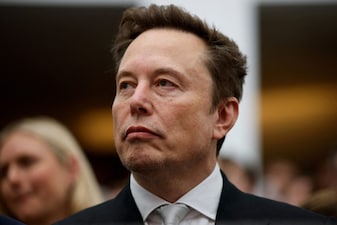
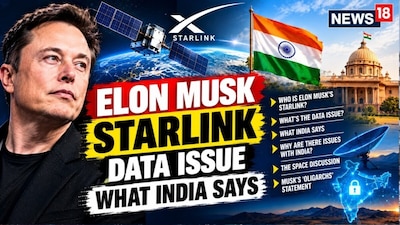
- •Elon Musk launched a reckless attack on X, accusing New Delhi of blocking Starlink in collusion with oligarchs simply because India insists on regulatory compliance and security scrutiny.
- •Musk's portrayal of Bharat as a digital wilderness requiring American salvation is patronising, given that over 97 per cent of Indian villages already have mobile and 4G connectivity.
- •Starlink's exorbitant pricing models, as seen in Bangladesh, make the service unaffordable for ordinary users, contrasting sharply with India's remarkably cheap mobile data.
- •National security remains non-negotiable for Delhi, especially given cautionary tales like Ukraine where Musk unilaterally manipulated Starlink access based on geopolitical concerns.
- •India has every right to protect its strategic autonomy and examine foreign communications infrastructure under a microscope, just as the United States restricts Chinese tech giants.
Key Questions Answered
Elon Musk accused unnamed Indian oligarchs and New Delhi of blocking Starlink's commercial launch to protect a monopolistic chokehold over the internet market, an allegation the Indian government flatly rejected. Officials maintained that the regulatory framework is fair, non-discriminatory, and focused on essential national security and compliance requirements.
India's concerns involve strategic autonomy, lawful interception, data protection, and traffic routing to prevent foreign satellite operators from bypassing domestic gateways. Officials are particularly cautious about Starlink's centrally controlled network and technologies like Laser Inter-Satellite Link routing, which require strict scrutiny before critical communication infrastructure is approved.
India features some of the cheapest mobile data globally, with costs dropping significantly over the past decade, alongside broad connectivity reaching roughly 97.65 per cent of villages by May 2025. This contrasts sharply with experiences in places like Bangladesh, where Starlink's services proved prohibitively expensive and economically mismatched for ordinary users.