Stories
Meet Jonathan the 194-Year-Old Tortoise Whose DNA May Hold Secrets to Longevity
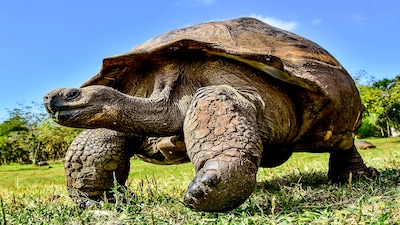
- •Jonathan is the world's oldest known land animal, believed to have been born around 1832 and living on the remote island of St. Helena.
- •Scientists sequenced Jonathan's genome for the first time using a cheek swab collected by veterinarian Joe Hollins.
- •Researchers found molecular differences in genes associated with DNA repair and telomere maintenance compared to younger tortoises.
- •Jonathan's epigenome revealed that regulatory switches associated with his mitochondria were unusually well preserved, resembling those of a young tortoise.
- •Scientists caution that Jonathan is a single animal and his longevity may also be supported by his protected environment and constant veterinary care.
Key Questions Answered
After sequencing Jonathan's DNA, researchers found molecular differences in genes associated with DNA repair and telomere maintenance when comparing him to tortoises about 100 years younger. His genome suggests that giant tortoises may possess evolved mechanisms making them resilient to age-related decline.
Believed to have been born around 1832, Jonathan is approximately 194 years old. He holds official Guinness World Records as the world's oldest known living land animal and the oldest tortoise, and has been named a GWR ICON.
Because drawing blood posed an infection risk, veterinarian Joe Hollins collected a saliva sample by swabbing the inside of Jonathan's cheek. The extraction was challenging due to Jonathan's 400-pound weight, razor-sharp beak, and powerful legs, which allowed the tortoise only seconds to react before the team risked being struck.