Stories
Game Developer Uses AI to Uncover Two Potential Planets Hidden in NASA Data
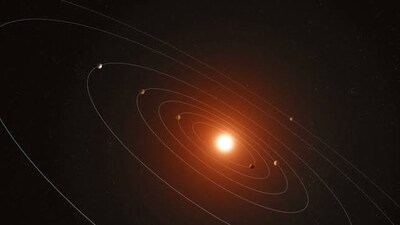
- •Game developer Pavel Rabtsevich used artificial intelligence tools from Anthropic and OpenAI to analyze NASA telescope data and identify unusual dimming patterns in a star.
- •The star's brightness dropped roughly every three days, a phenomenon often caused by a planet passing in front of it using the transit method.
- •Rabtsevich found consistent patterns in older observations from 2018 and 2020, suggesting the presence of two possible orbiting planets.
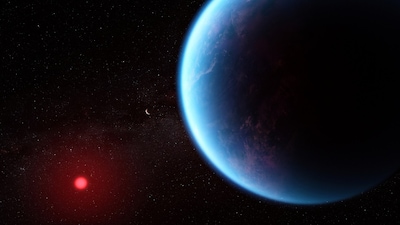
- •The first potential planet is estimated to be 1.4 times the size of Earth with a three-day orbit, while the second possible planet is larger with an 11-day orbit.
- •NASA has accepted a proposal to observe the star again in November using the Transiting Exoplanet Survey Satellite to verify the findings.
Key Questions Answered
Pavel Rabtsevich used artificial intelligence tools from OpenAI and Anthropic to study data collected by NASA's Transiting Exoplanet Survey Satellite (TESS). He identified a star that regularly became slightly dimmer every three days, which is a sign of a potential planet passing in front of it using the transit method.
His analysis suggests that the first possible planet is about 1.4 times the size of Earth and orbits the star in just over three days. The second possible planet is less certain, but it appears to take around 11 days to complete an orbit.
No, the discovery is not yet confirmed. NASA has accepted a proposal to observe the star again with TESS in November to check the predictions, but more observations and the elimination of other explanations are needed.