Stories
Leaving Mobile Charger Plugged In? Uncover the Truth About Monthly Electricity Consumption.
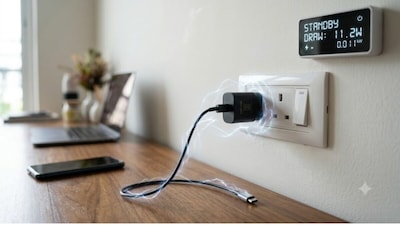
- •An idle mobile charger, even when plugged in, consumes a very small amount of electricity, known as 'no-load' or 'standby' power.
- •A single charger consumes approximately 0.07 units of electricity per month, costing less than ₹1.
- •While one charger's impact is minimal, combined standby consumption from multiple devices can increase overall electricity usage.
- •For significant electricity bill savings, focus on high-power appliances like ACs and geysers rather than just mobile chargers.
- •Overnight mobile charging does not consume excessive electricity as the charger reduces power once the phone is fully charged.
Key Questions Answered
Yes, an idle charger connected to a powered socket consumes a tiny amount of electricity known as standby or no-load power because its internal circuit remains active. However, this consumption is extremely low, typically resulting in a cost of less than ₹1 per month for a single charger.
Assuming an average standby power consumption of 0.1 watts and continuous connection for 24 hours a day, a charger consumes about 0.072 units of electricity over 30 days, which amounts to roughly ₹0.58 per month at ₹8 per unit.
To make a significant difference in your monthly electricity bill, you should focus on reducing the usage time of high-power appliances like ACs, geysers, heaters, electric irons, microwaves, and long-running coolers or fans rather than worrying about idle mobile chargers.