Stories
NASA's PRIMA Telescope to Uncover Universe's Hidden Secrets by 2033
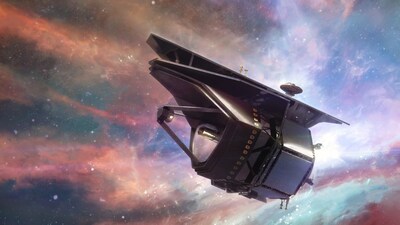
- •NASA selected PRIMA, a far-infrared space telescope, as the first mission in its new Probe Explorers class, targeting a 2033 launch.
- •PRIMA, or Probe far-Infrared Mission for Astrophysics, will investigate the formation and evolution of planets, stars, galaxies, and black holes.
- •The observatory will carry a 1.8-meter telescope to conduct deep and sensitive surveys, bridging the observational gap between James Webb Space Telescope and radio telescopes.
- •By observing far-infrared light, PRIMA will explore cosmic regions obscured by dust, revealing cold cosmic material and environments where stars and planetary systems develop.
- •Key objectives include understanding exoplanet formation, the growth of galaxies and their central black holes, and the accumulation of cosmic dust and heavy elements, potentially shedding light on Earth's water origins.
Key Questions Answered
PRIMA stands for Probe far-Infrared Mission for Astrophysics, a $1.2 billion far-infrared space telescope selected as the first mission in NASA's new Probe Explorers class. NASA is targeting a launch in 2033 for the observatory's planned five-year science mission.
PRIMA will investigate how planets, stars, galaxies, and supermassive black holes formed and evolved. Using far-infrared light, it aims to study cold cosmic material, explore planetary formation beyond the Solar System, examine cosmic dust accumulation, and investigate the cosmic origins of water on Earth.
NASA announced on September 23 that PRIMA has advanced to Phase B, which focuses on preliminary design and technology development. The project must still pass a confirmation review before it can move into full implementation.