Stories
Universal Adult Franchise: Upholding India's Constitutional Promise of Political Equality
- •Article 326 of the Constitution enshrines universal adult franchise, granting every adult citizen an equal voice irrespective of religion, caste, or economic status.
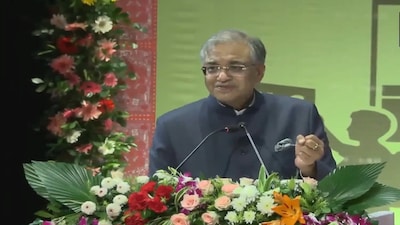
- •Supreme Court Justice Ujjal Bhuyan emphasized that the right to vote is intertwined with India's freedom struggle and forms part of the Constitution's basic structure.
- •Constituent Assembly leaders like Alladi Krishnaswami Ayyar defended universal suffrage, believing it would bring enlightenment and well-being to the common man despite widespread illiteracy.
- •While some members like Brajeshwar Prasad opposed adult franchise due to concerns over literacy and practical democracy, the framers ultimately chose political equality.
- •Over decades of jurisprudence, the Supreme Court has elevated the right to vote from a mere statutory privilege to a fundamental constitutional right under Article 326.
Key Questions Answered
Article 326 of the Constitution of India enshrines the universal adult franchise, ensuring that every adult citizen has an equal voice in determining the country's political future regardless of religion, caste, creed, gender, or economic status. Supreme Court Justice Ujjal Bhuyan noted that this right to vote is intertwined with India's struggle for freedom and forms part of the basic structure of the Constitution.
Initially, the Supreme Court held in cases like N.P. Ponnuswami and Jyoti Basu that the right to vote was a statutory right rather than a fundamental or common law right. However, in later judgments such as People’s Union for Civil Liberties v. Union of India and finally Rajbala v. State of Haryana, the apex court established that the right to vote under Article 326 is a constitutional right subject to certain limitations.
While figures like Khandubhai Kasanji Desai and Alladi Krishnaswami Ayyar strongly defended the universal franchise as a foundational commitment to political equality, other members expressed skepticism. Brajeshwar Prasad opposed it as a violation of democracy due to widespread illiteracy, while Hriday Nath Kunzru and Thirumala Rao questioned whether a sudden expansion of voting rights would help develop democratic restraint and ideas.