Stories
Evolution of India's Election Commission: From Single to Multi-Member Body
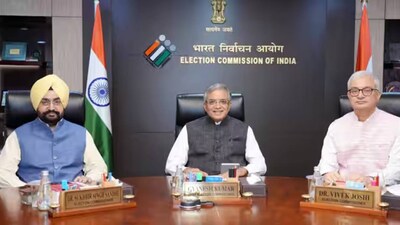
- •The Election Commission of India (ECI) was established on January 25, 1950, before India became a Republic, highlighting its constitutional importance.
- •Initially a single-member body, the ECI briefly became multi-member in 1989 before reverting to a single-member structure in 1990 after a Supreme Court ruling.
- •The Supreme Court, while upholding the President's power to determine the number of Election Commissioners, recognized the institutional value of a multi-member body for deliberation and reducing arbitrariness.
- •Since October 1, 1993, the ECI has functioned as a three-member institution, with the Chief Election Commissioner and other Election Commissioners placed on an equal footing in terms of tenure, salary, and decision-making powers.
- •The 1993 reform transformed the ECI into a genuinely collegial decision-making body, where decisions are made by majority view, emphasizing collective responsibility and equality among members.
Key Questions Answered
When the Janata Dal election symbol controversy led to short-lived appointments of additional commissioners, the government rescinded the posts in 1990. The Supreme Court upheld the presidential order, ruling under Article 324(2) that the executive's power to create posts includes the authority to reduce or abolish them, while noting that the roles of those additional posts were undefined.
The Election Commission officially transitioned into a definitive three-member institution on October 1, 1993. This change followed legal amendments that placed the Chief Election Commissioner and other Election Commissioners on an equal footing regarding tenure, age limits, service conditions, and decision-making powers.
The 1993 amendment to the Chief Election Commissioner and Other Election Commissioners Act granted all three members equal decision-making powers. Under this framework, if unanimity cannot be reached among the commissioners, the final choice is determined by the majority view, transforming the panel into a genuinely collegial body.