Stories
India's Nuclear Dream Needs Flexible Approach, Faster Thorium Exploitation
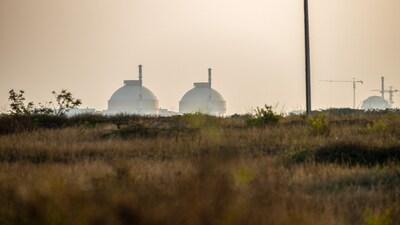
- •India's nuclear energy sector sees momentum with the SHANTI Act of 2025, ending NPCIL's monopoly, and the PFBR achieving criticality in April 2026.
- •Despite progress, a parliamentary committee report highlights delays in key projects and raises concerns about achieving Bhabha's three-stage nuclear dream by 2047.
- •The third stage, focusing on thorium exploitation, is now projected to go beyond the 2050s, more than a century after its initial conception.
- •India is exploring molten salt reactors for thorium utilization but has not yet committed to a specific design, with R&D ongoing.
- •To accelerate nuclear power growth and thorium use, India should double down on PHWRs with private sector involvement, experiment with diverse reactor designs, and consider a new fuel mix for existing reactors.
Key Questions Answered
Passed in December 2025, the Sustainable Harnessing and Advancement of Nuclear Energy for Transforming India (SHANTI) Act repealed the Atomic Energy Act of 1962 and the Civil Liability for Nuclear Damage Act of 2010, ending the monopoly of players like NPCIL and opening up the civil nuclear sector to private and foreign participation.
India's second-stage 500-MW prototype fast breeder reactor (PFBR) at Kalpakkam attained criticality in April 2026, marking India's entry into the second stage of Bhabha’s nuclear dream using plutonium and depleted uranium.
The nuclear establishment indicates that commercial-scale operationalisation of the third stage utilizing thorium will likely happen in the latter half of the century, going beyond the 2050s. Molten salt reactors are favored for this stage, alongside potential considerations for new fuel mixes like thorium and high-assay low-enriched uranium in existing PHWRs.