Stories
TN Seshan vs. Union of India: Does CEC Gyanesh Kumar lack 'superpower'?
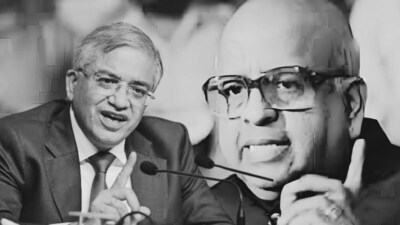
- •The 1995 TN Seshan vs. Union of India judgment established that the Election Commission is a multi-member body, and the Chief Election Commissioner (CEC) is not unilaterally more powerful than other commissioners.
- •The Supreme Court ruled that while the CEC heads the commission, they are not the sole decision-maker; decisions are made by consensus or majority.
- •Recent reports indicated that two commissioners, other than CEC Gyanesh Kumar, objected to commission decisions 14 times in 10 months, prompting the EC to clarify this is part of its democratic character.
- •The appointment of the CEC and other Election Commissioners is governed by the Chief Election Commissioner and Other Election Commissioners (Appointment, Conditions of Service and Term of Office) Act, 2023, involving a selection committee.
- •Section 18 of the current law states that commission decisions are made by consensus, or by majority opinion in case of disagreement, reinforcing that the CEC does not possess 'superpower' in decision-making.
Key Questions Answered
In 1995, the Supreme Court ruled that while the Chief Election Commissioner is the head of a multi-member Election Commission, he does not possess overriding authority to make decisions alone, establishing that the CEC is 'first among equals' alongside other commissioners.
Under the Chief Election Commissioner and Other Election Commissioners Act of 2023, appointments are made by the President based on a panel prepared by a search committee and vetted by a selection committee consisting of the Prime Minister, a Union Cabinet Minister, and the Leader of the Opposition.
By law, the Election Commission strives to reach decisions through consensus, but if disagreements arise, matters are resolved by a majority vote among the three commissioners, meaning a sole CEC opinion cannot override the others.