Stories
Mysuru Dasara: Essential Tips for Arranging Dolls at Home

- •Arranging dolls during Navratri is a vibrant tradition that fosters family unity and preserves cultural heritage passed down through generations.
- •Dolls are traditionally arranged on odd-numbered steps such as three, five, seven, or nine, covered with a clean white cloth.
- •Steps can be easily created using household items like tables, cupboards, benches, stools, or empty boxes depending on available space.
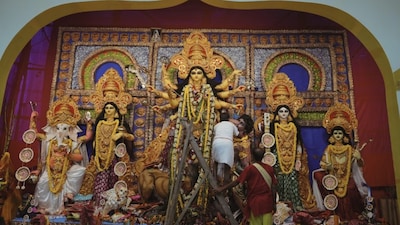
- •Idols of major deities like Rama-Lakshmana-Sita, Krishna-Radha, Shiva, and Durga should be placed on the top step.
- •Saints are placed on the middle steps, while dolls depicting weddings, processions, or daily village life go on the bottom steps.
Key Questions Answered
Dolls are arranged on steps consisting of odd-numbered levels, specifically three, five, seven, or nine steps. These steps are created using household items like tables, benches, cupboards, or boxes, covered with a white cloth, and placed in the living room after removing furniture.
Idols of major deities like Rama-Lakshmana-Sita, Krishna-Radha, Shiva, Vishnu, Durga, Lakshmi, and Saraswati are placed on the top step. The middle steps feature saints and religious figures, while the bottom step showcases dolls depicting weddings, religious processions, or village life.
The dolls are mostly crafted in the Thanjavur style using clay or plaster of Paris. Families often preserve these traditional dolls across generations, sometimes keeping pieces that are over a hundred years old while adding new ones each year.