Stories
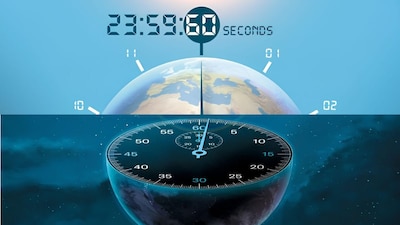
Will Clocks Never Show 23:59:60 Again? The Future of Leap Seconds Explained

- •International timekeeping organizations may abolish the leap second system by October 2026 to prevent discrepancies in modern timekeeping.
- •Leap seconds are added to keep clock time synchronized with the Earth's inconsistent daily rotation, similar to how leap years work.
- •Since 2015, the Earth has been rotating at an unusually fast speed, raising the possibility of needing a negative leap second for the first time.
- •A draft proposal is being considered to make UTC a continuously running time system starting May 20, 2027, abolishing the abrupt addition of leap seconds.
Key Questions Answered
Modern time systems no longer use the Earth's inconsistent rotation as a time basis, creating a gap between old and modern definitions of a second. To resolve discrepancies, experts have used leap seconds, but changing international policies and unusually fast Earth rotation since 2015 have made abolishing abrupt leap seconds necessary to prevent computer system issues.
The meeting of the General Conference on Weights and Measures is scheduled to be held from October 13 to 15, 2026, where a policy regarding the addition of leap seconds and maximum limits between UTC and UT1 will be addressed.
A draft proposal is being considered under which UTC would become a continuously running time system starting May 20, 2027, completely abolishing the system of abruptly adding leap seconds.