Stories
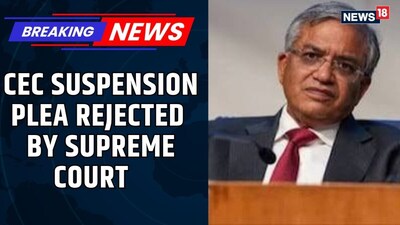
Supreme Court Delivers Split Verdict on CEC Appointment Law Challenge

- •The Supreme Court delivered a split verdict on whether petitions challenging the 2023 law governing the appointment of the Chief Election Commissioner (CEC) and Election Commissioners should be referred to a larger five-judge Bench.
- •The petitions contest provisions of the law that removed the Chief Justice of India from the selection panel for appointing the CEC and Election Commissioners.
- •Justice Deepankar Datta rejected the plea for a larger bench reference, while Justice SC Sharma held that the issue should be referred to a five-judge bench.
- •The split verdict means the matter requires further judicial consideration before a final decision on the petitions.
- •Petitioners argue that excluding the Chief Justice of India from the selection panel undermines free and fair elections and compromises the independence of the Election Commission of India.
Key Questions Answered
The Supreme Court delivered a split verdict on whether the petitions challenging the validity of the 2023 law governing the Chief Election Commissioner's appointment should be referred to a larger five-judge Bench. Justice Deepankar Datta rejected the reference plea, while Justice SC Sharma held that the issue required consideration by a five-judge bench.
The petitions challenge the provisions of the Chief Election Commissioner and Other Election Commissioners Act, 2023, specifically because it removed the Chief Justice of India from the selection panel. Petitioners argue this exclusion undermines free and fair elections and compromises the Election Commission's independence by granting the government greater control.
The petitions challenging the 2023 appointment law were filed by organizations and political figures, including the Association for Democratic Reforms (ADR) and Congress leader Jaya Thakur. Advocate Prashant Bhushan also appeared for petitioners during the court proceedings.