Stories
Dussehra 2026: How Did Ravana Get 10 Heads and What Do They Symbolize?
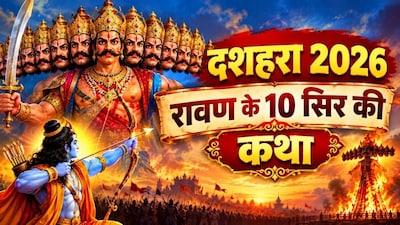
- •Ravana is known as Dashanan because he possessed 10 heads, but he did not get them by birth.
- •According to texts like Valmiki Ramayana, Ravana performed severe penance for 10,000 years to please Lord Brahma.
- •He cut off his head and offered it to the fire pit after every 1,000 years, and Lord Brahma restored it each time.
- •In the 10,000th year, Lord Brahma appeared and granted him 10 heads along with the boon of immortality via nectar in his navel.
- •Symbolically, Ravana's 10 heads represent ten inner vices including lust, anger, greed, ego, and jealousy.
Key Questions Answered
Ravana did not have 10 heads by birth, but rather earned them through 10,000 years of severe penance at the Gokarna pilgrimage site to please Lord Brahma. Every 1,000 years, he cut off his head and offered it to a fire pit, after which Lord Brahma restored it each time. In the 10,000th year, Lord Brahma appeared and officially granted him 10 heads along with nectar in his navel.
Ravana's 10 heads serve as symbols for his various internal evils and negative flaws. Specifically, they symbolize lust, anger, attachment, greed, arrogance, jealousy, fickleness, perverted intellect, a mind surrounded by ego, and conceit. On Dussehra, these inner vices are meant to be eradicated.
During the war in Lanka, Vibhishana revealed to Lord Rama that there was nectar stored inside Ravana's navel. Ravana ultimately met his death when Lord Rama shot an arrow directly into his navel.