Stories
India's Drone Strategy: Comparing US-Made MQ-9B And Indigenous TAPAS
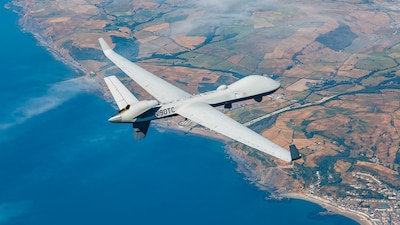
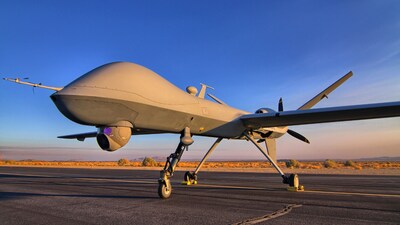
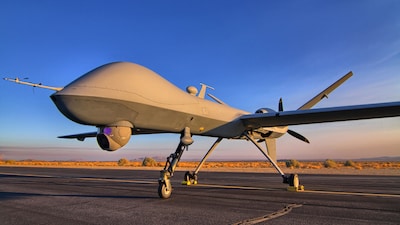
- •India is acquiring 31 advanced US-made MQ-9B drones from General Atomics for the Army, Navy, and Air Force while simultaneously developing its own TAPAS BH-201 through DRDO.
- •The MQ-9B offers superior capabilities, including a 40-hour endurance, an operating altitude above 40,000 feet, a 2,177 kg payload capacity, and the ability to be armed with precision weapons like Hellfire missiles.
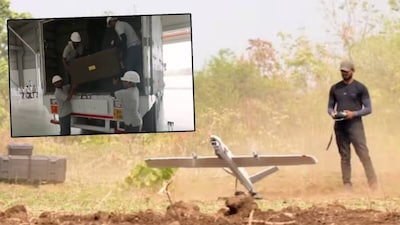
- •The domestically developed TAPAS is primarily an intelligence, surveillance, and reconnaissance platform with a demonstrated endurance of over 18 hours, an altitude of 28,000 feet, and a 350 kg payload.
- •While the MQ-9B provides immediate high-end military strength and maritime surveillance, TAPAS represents a crucial indigenous step for India to build domestic expertise and reduce foreign dependency in unmanned aviation.
Key Questions Answered
The MQ-9B SeaGuardian can remain airborne for around 40 hours and operate above 40,000 feet. In comparison, DRDO reported in 2023 that the TAPAS BH-201 demonstrated an endurance of over 18 hours and can operate at altitudes up to 28,000 feet, which fell slightly short of its original goals.
The MQ-9B can carry a total payload of about 2,177 kg and can be configured as a strike aircraft equipped with weapons like AGM-114R Hellfire missiles. Meanwhile, TAPAS carries up to about 350 kg and is primarily developed as a surveillance and reconnaissance platform rather than an operational armed drone.
India is buying mature MQ-9Bs from General Atomics to meet immediate needs for a high-end, long-endurance armed and maritime surveillance platform. At the same time, developing the indigenous TAPAS programme helps Indian engineers gain crucial expertise in unmanned aircraft technology, reducing future foreign dependence.