Stories
RBI Repo Rate Hike: Will Your Gold Loan Get Costlier?
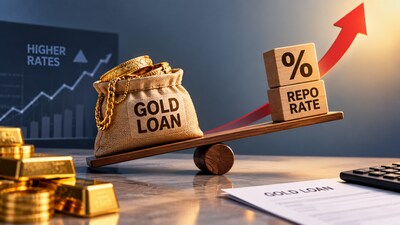
- •The RBI's potential 50 basis point repo rate hike by December 2026 could increase borrowing costs across the financial system, including gold loans.
- •A repo rate increase does not automatically translate to an equivalent rise in gold loan interest rates; the impact depends on the lender's funding and pricing structure.
- •Existing gold loan borrowers with fixed rates will likely see no change, while those with floating rates could face higher interest upon reset.
- •Falling gold prices increase collateral risk for lenders, as the value of pledged gold may drop relative to the outstanding loan amount, potentially requiring action if LTV limits are breached.
- •Borrowers should consider interest rates, tenure, repayment structure, fees, and their ability to service the loan if costs rise, along with understanding LTV and valuation methodology.
Key Questions Answered
A repo rate increase does not automatically translate into an equivalent rate hike for every gold loan. For fixed-rate loans, the interest rate remains unchanged during the agreed period, while floating-rate loans may see higher rates upon reset depending on the terms.
A sharp decline in gold prices reduces the value of the pledged collateral relative to the outstanding loan, increasing collateral risk. Lenders must continuously monitor LTV levels, which cannot exceed 75 percent for applicable loans under RBI rules.
Borrowers should compare interest rates, tenure, repayment structures, processing fees, and default consequences rather than focusing solely on headline rates. They must assess if they can service the loan if borrowing costs rise and understand the lender's LTV and valuation terms.