Stories
Understanding the Vital Role of the Pancreas in Digestion and Blood Sugar Control
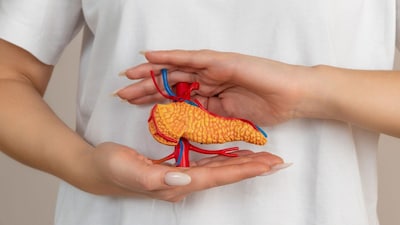
- •The pancreas is a small organ located behind the stomach that plays a crucial role in both food digestion and blood sugar regulation.
- •It produces essential digestive enzymes that break down fats, proteins, and carbohydrates, along with bicarbonate to neutralize stomach acid.
- •The organ produces vital hormones like insulin and glucagon, which work together to balance and control blood sugar levels in the body.
- •Disruptions in pancreatic function can lead to conditions like Exocrine Pancreatic Insufficiency, causing bloating, diarrhea, and nutrient deficiencies.
- •Long-term pancreatic issues can impair insulin production, increasing the risk of developing diabetes, including Type 3c diabetes.
Key Questions Answered
The pancreas is a small gland located behind the stomach that plays a crucial role in both food digestion and blood sugar regulation. It produces digestive enzymes to break down fats, proteins, and carbohydrates, alongside hormones like insulin and glucagon to balance blood sugar levels.
Exocrine Pancreatic Insufficiency occurs when the pancreas fails to produce enough digestive enzymes or they do not reach the small intestine properly. This disrupts fat digestion and can lead to symptoms like bloating, gas, diarrhea, weight loss, and deficiencies in vitamins A, D, E, and K.
Problems affecting the pancreas can impair insulin production, making blood sugar control difficult and increasing the long-term risk of diabetes. Specifically, diabetes caused by pancreatic disease is known as Type 3c diabetes, which can arise from chronic pancreatitis or pancreatic surgery.