Stories
Unlocking the Sacred Mysteries of Sandhi Puja During Durga Puja
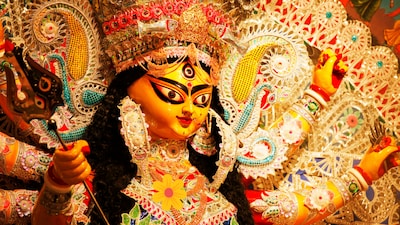
- •Sandhi Puja takes place during a precise 48-minute transition window between Maha Ashtami and Maha Navami, commemorating Goddess Durga taking the fierce form of Chamunda to defeat demons Chanda and Munda.
- •The lighting of 108 earthen lamps symbolizes the triumph of knowledge and good over evil, while reflecting the sacred number 108 found across Hindu spiritual traditions.
- •Offering 108 lotus flowers represents purity and spiritual awakening, famously linked to Lord Rama invoking Goddess Durga with blue lotuses before his battle with Ravana.
- •The number 108 represents spiritual completeness and is deeply embedded in Hindu practices, connecting the offerings to the 108 names of Maa Durga.
- •Sandhi Puja bridges mythology, powerful symbolism, and deep devotion, serving as one of the most revered and meaningful rituals of the Durga Puja festival.
Key Questions Answered
Sandhi Puja is a sacred ritual performed at the exact juncture where Maha Ashtami ends and Maha Navami begins, lasting for a brief 48-minute window comprising the final 24 minutes of Ashtami and the first 24 minutes of Navami. This transitional period commemorates the momentous time when Goddess Durga assumed the fierce form of Chamunda to vanquish the demons Chanda and Munda.
During Sandhi Puja, 108 earthen diyas are lit to illuminate the space and symbolize the removal of darkness, ignorance, and negativity, while reflecting the triumph of good over evil. The number 108 further adds spiritual completeness and serves as a profound expression of devotion to Maa Durga, aligning with sacred Hindu traditions and her 108 names.
Offering 108 lotus flowers during Sandhi Puja symbolises purity, spiritual awakening, and the ability to rise above worldly impurities. This tradition is famously linked to Lord Rama's invocation of Goddess Durga using 108 blue lotuses before his battle with Ravana, representing ultimate devotion and sacrifice.