Stories
Rani Rashmoni: Breaking Barriers to Build Bengal's Revered Dakshineswar Kali Temple
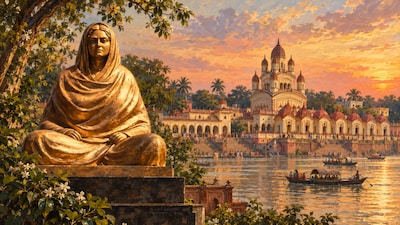
- •Rani Rashmoni, a formidable 19th-century philanthropist from the Mahishya community, envisioned and built the Dakshineswar Kali Temple, defying caste hierarchies and social conventions.
- •Widowed in 1836, Rashmoni inherited vast wealth and was inspired by a dream of Goddess Kali to construct a temple on the Ganges' banks instead of undertaking a pilgrimage to Kashi.
- •She purchased 54.4 bighas of land in Dakshineswar for ’42,500 in 1847, planning an expansive complex including the Kali temple, Shiva temples, and a Radha-Krishna temple.
- •The construction faced significant social challenges, as orthodox Brahmins resisted consecrating a temple built by a woman of her caste, requiring a workaround to dedicate the property to a Brahmin.
- •Consecrated on May 31, 1855, the temple later gained immense spiritual significance through Ramakrishna Paramahamsa, who transformed it into a center of religious inquiry and devotion.
Key Questions Answered
The Dakshineswar Kali Temple was formally consecrated on May 31, 1855, on the auspicious occasion of Snana Yatra.
The temple was envisioned and built by Rani Rashmoni, a wealthy landowner and philanthropist from the Mahishya community. Her decision to construct the shrine followed a dream in which Goddess Kali instructed her to abandon a pilgrimage to Kashi and build a temple on the Ganges instead.
In 19th-century Bengal, caste hierarchies and orthodox Brahmin establishments resisted Rashmoni's efforts, questioning whether someone from her community could legitimately establish and oversee a major religious shrine. To overcome the impasse of finding a willing priest for consecration, she followed the advice of scholar Ramkumar Chattopadhyay to dedicate the property to a Brahmin.