Stories
Induction Cooktop vs. Gas Stove: Which is Safer for Indian Kitchens?
N
News18•28-09-2026, 09:00
Induction Cooktop vs. Gas Stove: Which is Safer for Indian Kitchens?
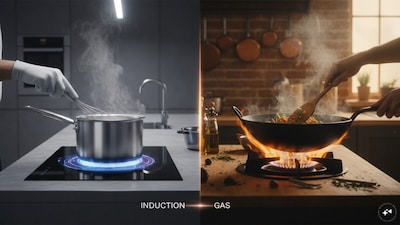
- •Induction cooktops offer clear safety advantages over gas stoves by eliminating open flames and gas leak risks, with features like automatic shut-off and overheat protection.
- •Gas stoves remain highly versatile for traditional Indian cooking, accommodating various cookware and allowing direct flame use, which induction cooktops cannot.
- •Induction is ideal for compact apartments, as a secondary cooking surface, or for households prioritizing safety due to children or elderly members.
- •Gas stoves excel in busy family kitchens requiring multiple burners for simultaneous cooking and offer intuitive heat control.
- •The most practical solution for many Indian households may be to use both: a gas stove for primary cooking and an induction cooktop for additional needs or when avoiding a flame.
Key Questions Answered
In terms of eliminating open flames and gas-leak hazards, induction cooktops are considered safer. They do not burn cooking gas or use naked flames, and many models feature automatic shut-off and overheat protection.
No, induction cooking requires magnetic, induction-compatible cookware. Utensils made of materials like aluminium or copper without a magnetic base will not work, and a simple way to check is to see if a magnet sticks firmly to the bottom.
Gas stoves remain superior for traditional Indian cooking because of their unmatched versatility. They accommodate a wide range of cookware, allow direct-flame roasting, and make it easy to prepare multiple dishes simultaneously.