Stories
Bubonic vs Pneumonic Plague: Key Differences, Fatalities and Transmission
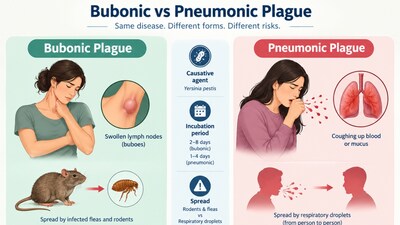
- •Both bubonic and pneumonic plagues are caused by the bacterium Yersinia pestis, which is found in wild rodents and their fleas.
- •Bubonic plague primarily attacks the lymph nodes following an infected flea bite, causing painful swollen buboes.
- •Pneumonic plague affects the lungs and spreads rapidly through respiratory droplets, making it the most virulent form of the disease.
- •Pneumonic plague has a much faster onset of 1 to 4 days and is almost always fatal if left untreated within 24 hours.
- •Bubonic plague has a lower untreated mortality rate of 30 to 60 percent compared to pneumonic plague and is rarely transmitted directly between humans.
Key Questions Answered
Bubonic plague is typically transmitted by infected flea bites and attacks the lymph nodes, forming painful swellings called buboes. Pneumonic plague is transmitted via respiratory droplets or when untreated bubonic plague spreads to the lungs, causing symptoms like a bloody cough.
Bubonic plague depends on rodents and fleas and is rarely transmitted directly between people. In contrast, pneumonic plague spreads faster through respiratory droplets when an infected person coughs, requiring close and prolonged contact.
Pneumonic plague is much more lethal, being almost always fatal within one to three days if left untreated. While bubonic plague has an untreated mortality rate of 30 to 60 percent, both forms can be treated effectively if antibiotics are administered promptly.