Stories
G20 Nations Unify to Tackle Structural Excess Capacity in Key Sectors
C
CNBC TV18•08-10-2026, 12:34
G20 Nations Unify to Tackle Structural Excess Capacity in Key Sectors
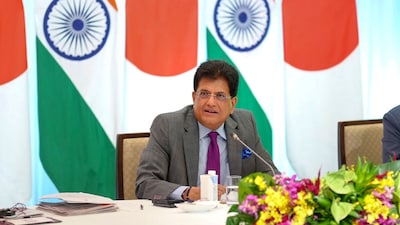
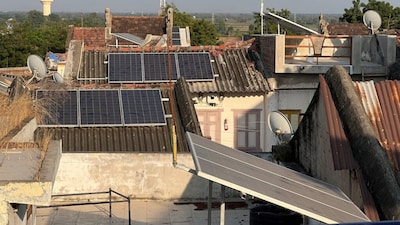
- •Trade ministers from several G20 nations agreed to address structural excess capacity and production in key manufacturing sectors including autos, electric vehicles, batteries, chemicals, foundational semiconductors, and solar panels.
- •The agreement was reached during the G20 Trade Ministers meeting in Milwaukee, Wisconsin, under the US G20 Presidency.
- •Signatories highlighted that excess capacity fueled by government interventions distorts prices, harms competition, deters market-based investments, and increases vulnerability to economic coercion.
- •While no specific country was named in the declaration, analysts like the Global Trade Research Institute note that China is the implied focus, and the agreement does not introduce immediate tariffs or quotas.
- •India joined the declaration despite being one of the economies currently under a USTR Section 301 investigation regarding excess capacity in sectors like solar modules, steel, and petrochemicals.
Key Questions Answered
G20 Trade Ministers agreed to work together in dedicated sectoral platforms to address structural excess capacity, starting with automobiles, electric vehicles (EVs), batteries, chemicals, foundational semiconductors, and solar panels.
The G20 Trade Ministers met in Milwaukee, Wisconsin, on September 30 and October 1, 2026, to discuss structural excess capacity and production in key manufacturing sectors.
On March 11, 2026, the USTR launched a Section 301 investigation into structural excess capacity across 16 economies, with India, the European Union, Japan, Mexico, and South Korea named as subjects. The deadline for final findings is set for March 11, 2027.