Stories
Gen Z Shopping: Marketers Must Adapt to Fluid Consumer Journeys

S
Storyboard•21-09-2026, 13:46
Gen Z Shopping: Marketers Must Adapt to Fluid Consumer Journeys
- •Gen Z is not a monolith; marketers need to understand their fluid movement across platforms, communities, creators, and commerce, rather than fitting them into fixed behaviors.
- •Pulkit Trivedi of Snap Inc. highlighted Gen Z's significant economic influence, with an estimated $200 billion in direct and $600 billion in indirect consumption in India by 2025.
- •Marketers should shift from a traditional broadcast mindset to a platform mindset, recognizing that each platform has unique behaviors and context, as Snapchat is used by 250 million daily users but often overlooked by marketers.
- •The consumer journey is no longer linear; discovery, validation, research, and purchase can happen almost simultaneously, making the marketing funnel more fluid.
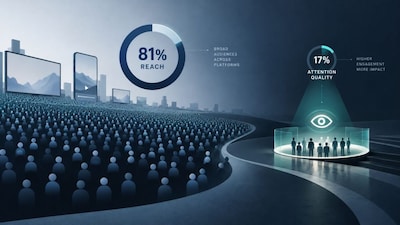
- •Relevance drives impact more than reach; an organic creator video generated 100,000 downloads for super.money, while a campaign with 40 million views had "zero impact," emphasizing the importance of participation over persuasion for Gen Z.
Key Questions Answered
Research conducted with BCG estimates that Gen Z accounts for $200 billion in direct consumption and $600 billion in indirect consumption in India in 2025.
Marketers must shift to a platform mindset because Gen Z's consumer journey is fluid and non-linear, with every platform possessing its own distinct behaviors, context, and communities where products are discovered, validated, and purchased.
Premanshu Singh highlighted that an organic creator video drove roughly 100,000 downloads, whereas a campaign featuring an IPL cricketer generated 40 million views but resulted in zero impact, demonstrating that relevance moves people while reach only provides visibility.