Stories
Pakistan lays 3 traps to evade India's dangerous missiles, but risks breaking its own jaw

- •The Indian Air Force's standoff strategy allows jets to destroy enemy targets from hundreds of kilometers away while staying within Indian airspace.
- •India's lethal missile arsenal includes BrahMos, SCALP, Rampage, Crystal Maze, and Rudram, minimizing risks for pilots.
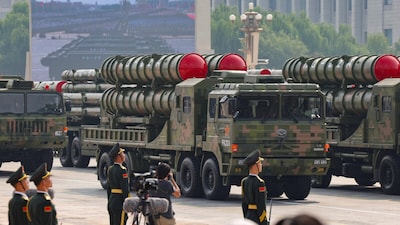
- •Panicked by India's edge, Pakistan has set up three defense traps using Chinese systems, including HQ-9P missiles, PL-15E BVR missiles, and electronic warfare systems.
- •Pakistan's fragile economy, the supersonic speed of missiles like BrahMos, and India's saturation attack capability make Pakistan's defense strategy nearly impossible and suicidal.
Key Questions Answered
The Indian Air Force's standoff strategy allows fighter jets to remain safely within Indian airspace while launching long-range missiles to precisely destroy enemy military camps and bunkers hundreds of kilometers away without entering Pakistan's airspace.
To counter India, Pakistan has deployed Chinese long-range surface-to-air missiles like the HQ-9P and HQ-16, inducted PL-15E air-to-air missiles with JF-17 Block 3 and J-10CE jets, and strengthened its airborne early warning and electronic jamming systems.
Pakistan's strategy is heavily reliant on expensive Chinese hardware that its struggling economy can ill afford. Furthermore, the supersonic speed of Indian missiles like the BrahMos leaves Pakistan's air defense only seconds to react, making saturation attacks impossible to intercept.