Stories
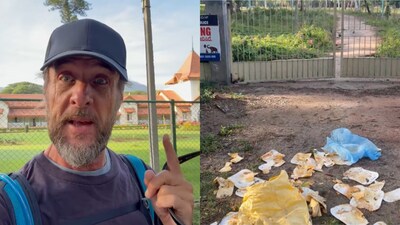
Foreigner Highlights India's 'Trash Problem,' Contrasts Clean Fenced Areas with Littered Public Spaces
N
News18•21-09-2026, 16:30
Foreigner Highlights India's 'Trash Problem,' Contrasts Clean Fenced Areas with Littered Public Spaces
- •Damon Zumbroegel, a foreigner, observed India's significant littering issue, noting that areas behind fences are clean while public spaces are filled with trash.
- •He pointed to Chamundi Hill in Mysore as an example, where sacred grounds are spotless due to restricted access, contrasting with widespread litter elsewhere.
- •Zumbroegel highlighted the paradox of Indians meticulously cleaning their homes but discarding waste in public, suggesting a historical shift from biodegradable materials to plastics as a contributing factor.
- •He argued that traditional habits of discarding natural materials persist despite the adoption of non-biodegradable plastics, leading to the current trash problem.
- •His observations sparked online discussion about civic responsibility, public cleanliness, and the need for systemic changes, including potential bans on single-use plastics and educational initiatives.
Key Questions Answered
While visiting Chamundi Hill in Mysore, Damon Zumbroegel observed that India has a widespread trash problem on the streets, but noted that restricted areas behind fences and barbed wire remain completely clean because people are not allowed to enter them.
He noted that Indians traditionally sweep and wash the front of their homes daily as a ceremonial habit, but suggested that modern plastics replaced natural decomposable materials like banana leaves, leading to persistent littering outside.
Online users agreed with his observations, pointing out a lack of civic sense that should be taught in schools, suggesting a ban on single-use plastics, and noting that people have become desensitised to littering.