Stories
Dutch Woman Defends India's Honking Culture: 'It's A Language Of The Road'
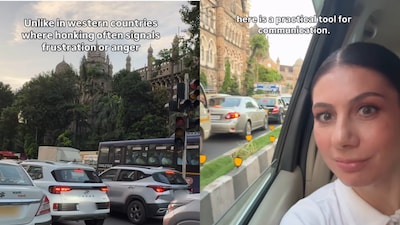
- •A Dutch woman living in India, Ivana, defended India's honking culture, arguing it's not a sign of being "backwards" but a practical communication tool.
- •She explained that unlike in Western countries where honking signals frustration, in India and Southeast Asia, it serves as a "language of the road."
- •Ivana highlighted that drivers use horns to announce presence, alert others, indicate overtaking, warn of blind turns, or even greet fellow motorists.
- •She questioned whether all cultural practices should be measured against Western norms, suggesting there's room for diverse cultural approaches to road management.
- •The video gained significant attention, with many internet users praising Ivana for her understanding of Indian culture and her perspective on cultural relativism.
Key Questions Answered
She defended India's honking culture by explaining that frequent horn usage is not a sign of being backward, but rather a practical tool for communication. Drivers use horns to announce their presence, signal overtaking, warn vehicles near blind turns, and greet others in heavy traffic.
Ivana explained that horns are used to announce a driver's presence, alert pedestrians, signal when overtaking, give warnings near blind turns, and greet fellow motorists as a courtesy. This practice helps keep the chaotic flow of traffic surprisingly organized.
Social media users called her explanation 'spot on' and praised her for capturing the cultural nuance accurately. Others agreed that horns are essential safety tools in heavy traffic, with one commenter noting that honking had saved their life multiple times.