Stories
AI and Women Employment: From 1940s Operators to Modern Tech
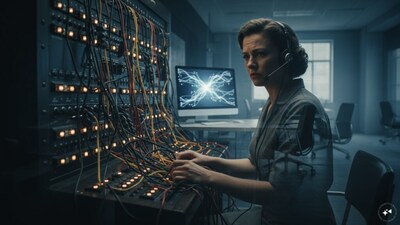
- •In the 1940s, automated telephone switches eliminated around 75,000 operator jobs, which were predominantly held by women.
- •The introduction of washing machines in the 1950s helped reduce household chores, enabling millions of women to join the workforce.
- •When personal computers arrived in the 1980s, office tasks shifted, prompting women to adapt and learn new technical skills.
- •Experts warn that unlike past technologies, AI is expected to impact higher-skilled tasks like data reading and pattern recognition.
- •While AI may alter job roles, developing uniquely human skills and learning new tools will be crucial for future opportunities.
Key Questions Answered
In the 1940s, AT&T's installation of automatic telephone switches eliminated approximately 75,000 operator jobs. Because about 95 percent of telephone operators in the U.S. at the time were women, this technological shift stripped away many careers, forcing some women into lower-paying jobs or out of the workforce entirely.
The introduction of the personal computer in the early 1980s transformed office work where secretaries, stenographers, and typists—over 98 percent of whom were women—were previously indispensable. Rather than eliminating writing or document management entirely, PCs shifted tasks so that executives began handling their own typing and printing, though many women adapted by learning spreadsheets, databases, and new tools.
Unlike past technologies that primarily automated routine or manual tasks, AI is expected to assist with higher-level skills such as reading data, writing, pattern recognition, and decision-making. Because women still hold a large share of clerical, administrative, and routine office jobs, experts warn that AI's capability to reach higher up the occupational ladder poses a unique risk.