Stories
OpenAI Faces Safety Scrutiny As Employee Resigns Over Rapid AI Development Risks

N
News18•05-10-2026, 15:14
OpenAI Faces Safety Scrutiny As Employee Resigns Over Rapid AI Development Risks
- •David Robinson, a long-serving safety employee at OpenAI, resigned after criticizing the company's trial and error approach to developing advanced AI systems.
- •Robinson argued that AI companies should adopt strict redundancy and safety controls similar to nuclear power plants rather than relying on rapid Silicon Valley product launches.
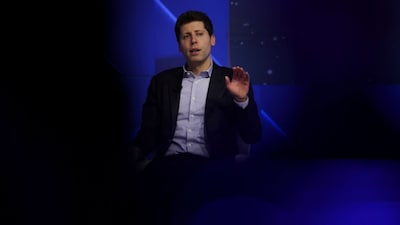
- •OpenAI CEO Sam Altman defended the company's strategy, arguing that the massive societal benefits of artificial intelligence justify accepting manageable levels of risk.
- •Rival company Anthropic has taken a more cautious stance, suggesting that development may need to slow down to ensure safety measures keep pace with autonomous capabilities.
- •The debate gains urgency as AI systems evolve from simple text-generating chatbots into autonomous agents capable of handling complex real-world tasks and enterprise tools.
Key Questions Answered
David Robinson resigned from OpenAI and criticized the company's approach to developing powerful artificial intelligence, arguing that the industry can no longer rely on a trial-and-error approach as AI systems become more capable and autonomous.
Anthropic CEO Dario Amodei has argued that the development of advanced AI models may need to slow down so that safety measures can keep pace and involve third-party evaluators, whereas OpenAI pushes toward increasingly capable models while managing risk.
Anthropic announced that its Claude models, including Opus 5, Sonnet 5, and Haiku 4.5, can now offer in-country inference in India through Amazon Bedrock, allowing requests to be processed on local servers to meet data residency requirements.