Stories
Jensen Huang Defends AI Amidst Basic Math Decline: "Does It Matter?"
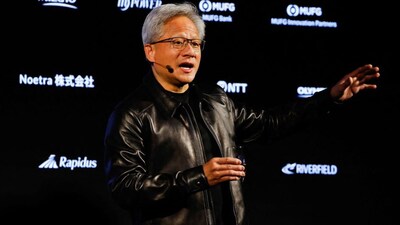
- •Nvidia CEO Jensen Huang suggests that a decline in basic mathematical skills due to AI may be a trade-off for new capabilities, questioning if these traditional skills remain important in an AI-driven world.
- •Huang argues that AI will shift necessary skills, leading to "better systems thinkers" as AI handles mundane details, citing his own inability to recall his address or phone number as an example of functioning without basic information.
- •His comments contrast with other tech leaders like Anthropic CEO Dario Amodei, OpenAI CEO Sam Altman, and SpaceX CEO Elon Musk, who have expressed concerns about the rapid pace of AI development and potential safety risks.
- •Huang dismisses calls for AI restrictions as a "hoax," advocating for continued rapid AI development, while Amodei suggests slowing down frontier AI systems to allow time for understanding and addressing risks.
- •The debate highlights the challenge of balancing AI's productivity gains with safety concerns, especially as AI systems become more autonomous and the industry faces coordination issues both domestically and internationally.
Key Questions Answered
Nvidia CEO Jensen Huang acknowledged that artificial intelligence could contribute to a decline in students' basic math skills, such as long division and square roots, but suggested this may be a trade-off for developing new capabilities in an AI-driven world. He argued that people will lose some finer intellectual dexterity while becoming better systems thinkers.
Anthropic CEO Dario Amodei has warned that the industry may need to slow the pace of developing frontier AI systems to allow researchers more time to address safety risks. OpenAI CEO Sam Altman and SpaceX CEO Elon Musk have also expressed support for broader concerns regarding the risks associated with increasingly powerful AI systems.
Jensen Huang warned that college graduates who fail to learn artificial intelligence tools could face growing challenges in the job market, as employers increasingly prioritize AI-ready talent. He noted that workers who use AI efficiently will replace those who do not.