Stories
India's AI Future: Enterprise Solutions Beyond Consumer Chatbots
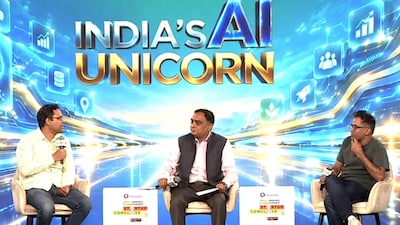
- •Indian AI startups are focusing on enterprise AI, integrating it into businesses, government services, and large-scale workflows, rather than just consumer chatbots.
- •Sarvam is building AI systems for agriculture, education, and healthcare, aiming for affordability and large-scale impact, including digitizing 4 crore LIC forms.
- •Emergent is expanding into autonomous business automation with AI agents, used by over 30,000 businesses daily, with significant growth in Western markets.
- •The future of AI in India involves embedding it into existing systems and processes, such as document processing, voice/video handling, and business automation.
- •Cost reduction is critical for AI adoption in India, with companies like Sarvam focusing on delivering capabilities affordably to meet market demands.
Key Questions Answered
Indian AI startups are increasingly targeting enterprise workflows, government services, and large-scale operations instead of just consumer chatbots. For instance, Sarvam is working on digitising four crore handwritten LIC forms using a custom model and is building its own GPU cluster, software stack, and infrastructure to handle documents, voice, video, and internal coding.
Emergent is expanding from software creation into autonomous business automation by deploying persistent AI agents that help businesses carry out tasks and operate more efficiently. Over 30,000 businesses currently use one of the company's persistent agent products daily, with faster growth noted in Western markets compared to India.
Cost is a major constraint because Indian buyers and institutions demand extensive features at the lowest possible price point. To successfully deploy AI at population scale across sectors like agriculture, healthcare, and education, companies must deliver capabilities cheaply while operating within strict financial limitations.