Stories
Unraveling the Mystery: How Green Anacondas Become the World's Heaviest Snakes
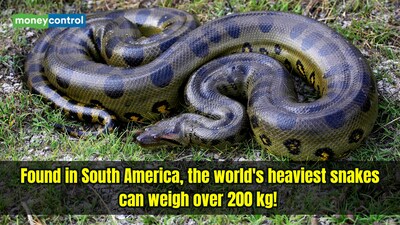
- •Green anacondas, found in South American wetlands, are the world's heaviest snakes, with some exceptional individuals weighing over 200 kg.
- •Unlike reticulated pythons, known for length, green anacondas are built for weight and strength, supported by their semi-aquatic lifestyle and hunting techniques.
- •Their massive size is linked to their carnivorous diet of fish, birds, capybaras, and caimans, and their ability to swallow large prey whole due to flexible jaws.
- •Water buoyancy plays a crucial role, reducing the effort needed for movement and allowing them to hunt efficiently despite their enormous weight.
- •Female anacondas are significantly larger than males, a reproductive adaptation enabling them to carry more offspring, as they give birth to live young.
Key Questions Answered
Green anacondas are the heaviest snakes due to their thick, muscular bodies, which can weigh over 200 kg in exceptional cases, and a biology built for weight and strength rather than just length. Their size is supported by a semi-aquatic lifestyle, access to substantial prey, and energy-efficient ambush hunting.
Female green anacondas are much larger and heavier than males because of reproductive advantages. Larger females can carry more developing offspring, as they give birth to live litters containing dozens of young.
As non-venomous constrictors, green anacondas use stealth by waiting near the water's edge or submerged to ambush prey. Once they strike, they grip the animal and coil their muscular bodies to restrict blood circulation, then use flexible jaws and expandable ligaments to swallow the prey whole.