Stories
How APJ Abdul Kalam and SLV-3 Built India's Space Legacy
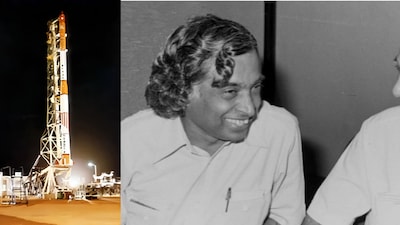
- •APJ Abdul Kalam led the SLV-3 project, which successfully placed the Rohini RS-1 satellite into orbit on July 18, 1980.
- •SLV-3 was India's first experimental satellite launch vehicle, standing 22 metres tall and weighing 17 tonnes.
- •The four-stage rocket was powered entirely by solid propellant and utilized an open-loop guidance system.
- •The successful mission made India the sixth country globally to achieve an indigenous satellite-launch capability.
- •The technological expertise gained from SLV-3 laid the foundation for advanced launch vehicles like the PSLV and GSLV.
Key Questions Answered
APJ Abdul Kalam served as the project director of the SLV-3 programme at the Indian Space Research Organisation (ISRO). Under his leadership, the project successfully placed the Rohini RS-1 satellite into orbit on July 18, 1980, marking a major milestone for India's space ambitions.
SLV-3 used four stages powered by solid propellant, generating thrust by burning propellant and expelling hot gases. As each stage exhausted its fuel, it separated to discard unnecessary mass, and the rocket relied on an open-loop guidance system following a predetermined flight path.
On July 18, 1980, the SLV-3 successfully carried the 35 kg Rohini RS-1 satellite into orbit. This historic mission made India the sixth country to achieve an indigenous satellite-launch capability and helped establish foundational expertise for future launch vehicles like the PSLV and GSLV.