Stories
Navratri 2026: Explore 7 Ancient Shakti Peethas and Their Deep Significance
- •Navratri is a major festival dedicated to Goddess Durga and Shakti, drawing devotees to sacred pilgrimage sites known as Shakti Peethas.
- •Shakti Peethas originated from the legend of Goddess Sati, whose body parts fell across the region after being separated by Lord Vishnu's Sudarshan Chakra.
- •While counts vary, there are widely recognised to be 51 Shakti Peethas scattered across India and neighbouring countries.
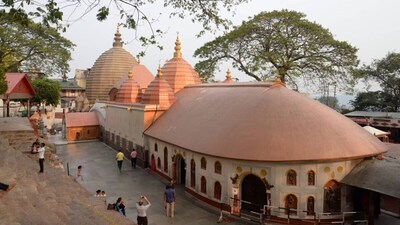
- •Key temples highlighted include the Kamakhya Temple in Assam, Kalighat Temple in West Bengal, and Jwalamukhi Temple in Himachal Pradesh.
- •Other significant shrines feature the Ambaji Temple in Gujarat, Mahalakshmi Temple in Kolhapur, Vimala Temple in Odisha, and Vishalakshi Temple in Varanasi.
Key Questions Answered
Shakti Peethas are sacred pilgrimage sites associated with Goddess Sati, the first wife of Lord Shiva. According to tradition, after Sati immolated herself, a devastated Lord Shiva wandered the universe carrying her body. To stop the destruction, Lord Vishnu used his Sudarshan Chakra to sever Sati's body, and the places where her body parts or ornaments fell became known as Shakti Peethas.
While there is no single universally accepted number, it is widely believed that there are 51 recognized Shakti Peethas, though some religious texts and regional traditions mention 52 or 108.
The Jwalamukhi Temple in Kangra is famous for its naturally occurring flames, where devotees worship sacred flames emerging from the earth instead of a conventional idol. The shrine is traditionally associated with Sati's tongue.