Stories
Unlock Hidden Health: The Surprising Benefits of Walking Backwards Revealed!
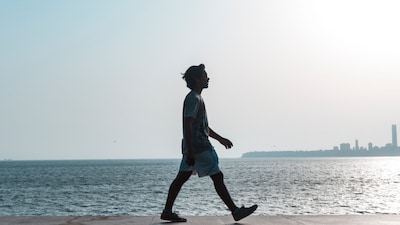
- •Retro walking, or walking backwards, engages muscles, balance, and coordination differently than forward walking, offering unique fitness advantages.
- •It significantly improves balance, coordination, and body awareness by requiring greater attention to foot placement.
- •This exercise works different muscles, emphasizing quadriceps and shin muscles while also engaging calves and glutes, strengthening the lower body.
- •Backward walking may be easier on the knees for some individuals, making it a potential rehabilitation exercise by altering loading patterns.
- •It challenges the brain, improving spatial awareness and concentration, and adds variety to monotonous walking routines without special equipment.
Key Questions Answered
Walking backwards, or retro walking, engages the body differently to improve balance, coordination, body awareness, mobility, and lower-body strength. It places more emphasis on the quadriceps, calves, glutes, and shin muscles while providing an extra challenge for the brain and spatial awareness.
Backward walking has been studied as a rehabilitation exercise for individuals with knee issues because its altered movement pattern can reduce certain loading patterns compared to forward walking. By strengthening the lower-body muscles around the legs and knees, it can help build strength and endurance, though its comfort level depends on the specific underlying condition.
Beginners should start slowly on a flat, open, and obstacle-free surface for just a few minutes with short, controlled steps. Avoid busy roads, uneven trails, and crowded areas, and ensure you have someone nearby or use a treadmill only if you are comfortable with it. Anyone with balance issues, joint injuries, or neurological conditions should consult a doctor or physiotherapist first.