Stories
Cauliflower VS Broccoli: Which is Healthier? A Detailed Nutritional Showdown!
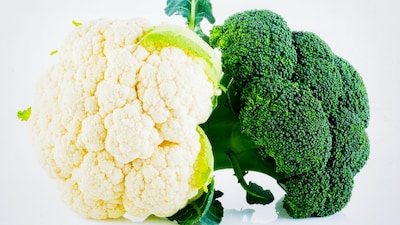
- •Cauliflower and broccoli, both from the Brassica family, differ in appearance, taste, and nutritional profiles.
- •Cauliflower is rich in Vitamin C, K, fiber, and folate; broccoli boasts higher levels of Vitamins A, C, K, iron, potassium, calcium, and sulforaphane.
- •Cauliflower aids digestion, weight management, and heart health; broccoli boosts immunity, helps prevent cancer, and benefits eye and bone health.
- •Broccoli is often considered a 'superfood' due to its higher antioxidant content and broader vitamin profile.
- •Including both vegetables in your diet offers a more balanced and comprehensive range of health benefits.
Key Questions Answered
While both vegetables are rich in nutrients, cauliflower is high in Vitamin C, Vitamin K, fiber, and folate while remaining low in calories. Broccoli contains high levels of Vitamins A, C, and K, along with iron, potassium, calcium, and a powerful antioxidant called sulforaphane.
Cauliflower aids digestion, helps manage weight, reduces inflammation, improves heart health, and is gentle on the stomach. Broccoli boosts immunity, helps prevent cancer due to its sulforaphane content, benefits eye and skin health, strengthens bones, and aids people with diabetes and heart diseases.
To preserve broccoli's nutrients, you can lightly boil, steam, sauté, or add it to soups, while cauliflower pairs well in curries, parathas, soups, stir-fries, and gravies. Both vegetables should be cooked lightly with minimal oil to retain maximum nutritional value.