Stories
Shatabdi Express: The Story Behind Its Name and How It Differs from Jan Shatabdi

- •The 'Shatabdi' name for Shatabdi Express commemorates the birth centenary of India's first Prime Minister, Jawaharlal Nehru.
- •Introduced in 1988 during Railway Minister Madhavrao Scindia's tenure, Shatabdi Express aimed to provide fast travel with good facilities.
- •The first Shatabdi Express commenced its journey on July 10, 1988, between New Delhi and Jhansi, later extended to Bhopal.
- •Shatabdi Express trains are daytime intercity services connecting major cities, featuring only seating arrangements like chair car and executive class, without sleeper coaches.
- •Jan Shatabdi Express, launched in 2002, aimed to offer fast daytime intercity travel at a lower cost, with more affordable fares and optional catering, making it accessible to common people.
Key Questions Answered
The term 'Shatabdi' means a century or a period of 100 years. The Shatabdi Express was introduced in 1988 by the then Railway Minister Madhavrao Scindia to commemorate the birth centenary of India's first Prime Minister, Jawaharlal Nehru.
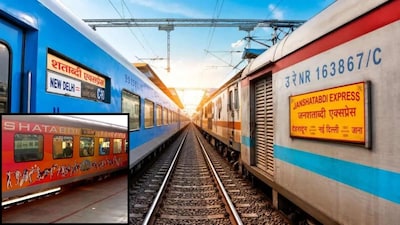
Shatabdi trains are premium services with higher fares, and catering may be included depending on the service and ticket type. In contrast, Jan Shatabdi trains are more affordable for the common people and generally do not include food in the base fare, allowing passengers to purchase it separately.
Shatabdi Express trains are designed as daytime intercity services that complete their journeys during the day and do not have sleeper coaches. Instead, they exclusively offer seating arrangements such as chair car and executive class coaches.