Stories
Can a Daughter-in-Law Claim a Share in Her In-Laws Property Under Indian Law?
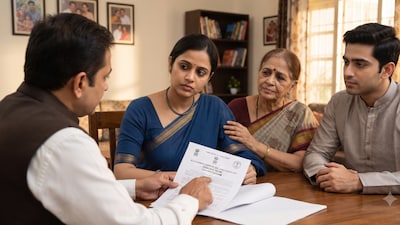
- •Marriage does not automatically make a woman a co-owner or give her a direct share in her in-laws exclusively owned property.
- •Under the Protection of Women from Domestic Violence Act, 2005, a woman may have the right to reside in a shared household during a domestic relationship.
- •A wife does not automatically own half of her living husbands assets, and her inheritance rights only apply to his estate upon his death.
- •As a Class I heir under the Hindu Succession Act, 1956, a widow can inherit a share of her deceased husbands property if he dies without a will.
- •A widowed daughter-in-law unable to maintain herself may claim maintenance and residence rights under the Hindu Adoptions and Maintenance Act, 1956.
Key Questions Answered
No, a woman does not automatically become a co-owner of her in-laws' property after marriage. If a house belongs exclusively to her father-in-law or mother-in-law, she generally cannot claim a direct share merely because she is their daughter-in-law, as ownership depends on legal titles and inheritance.
Under the Protection of Women from Domestic Violence Act, 2005, a woman in a domestic relationship may have the right to reside in a shared household, even if she does not own it. The Supreme Court has clarified that this right is not restricted solely to properties owned by her husband, though residence rights are legally distinct from ownership.
Yes, a widowed daughter-in-law who cannot maintain herself may claim maintenance and residence under the Hindu Adoptions and Maintenance Act, 1956, if statutory conditions are met. For instance, the Delhi High Court ruled that a father-in-law must provide suitable alternative accommodation or rent to an unmaintained widowed daughter-in-law before recovering possession of his flat.