Stories
Mushroom Farming Without Fields: Boost Your Income With Low Investment

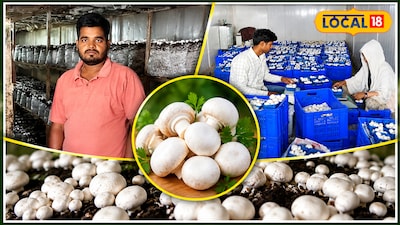
- •Farmers in Moradabad can cultivate mushrooms with minimal space and low investment in closed rooms or thatched sheds without needing agricultural fields.
- •Main cultivated varieties include button, oyster and milky mushrooms, which are grown across different seasons depending on the temperature.
- •Agricultural scientist Dr. Deepak Mehandiratta explains that button mushroom compost is prepared using straw, urea, calcium, and wheat bran over a month.
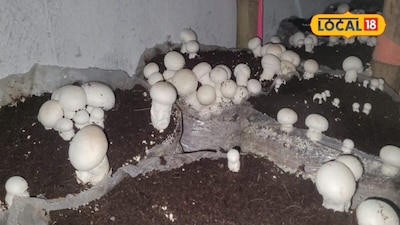
- •Casing soil made from old cow dung manure, cocopeat, or sand is applied over the compost, and mushrooms emerge within 10 to 15 days.
- •One quintal of compost yields about 20 to 30 kg of mushrooms, which are protein-rich and have a steady market demand for fresh sale or pickles.
Key Questions Answered
The main varieties of mushrooms cultivated are button, oyster (dhingri), and milky mushrooms. Button mushrooms are grown during the winter season, oyster mushrooms thrive at normal temperatures, and milky mushrooms are cultivated in the summer. For beginner farmers, starting with oyster mushrooms is considered the easiest option.
To prepare compost for button mushrooms, materials like straw, urea, calcium, ammonium nitrate, molasses, and wheat bran are mixed together. This mixture is turned every four days, and after turning it seven times over about a month, the compost is ready for use. During this preparation phase, the temperature must be kept between 25 and 32 degrees Celsius.
About 15 days after placing compost in trays or bags, white spots of spawn appear, and a low-nutrient casing soil layer is added on top. Materials like three-year-old cow dung manure, cocopeat, or old manure mixed with sand can be used for this casing layer. Mushrooms emerge 10 to 15 days later and are harvested by gently twisting them with light hands.